


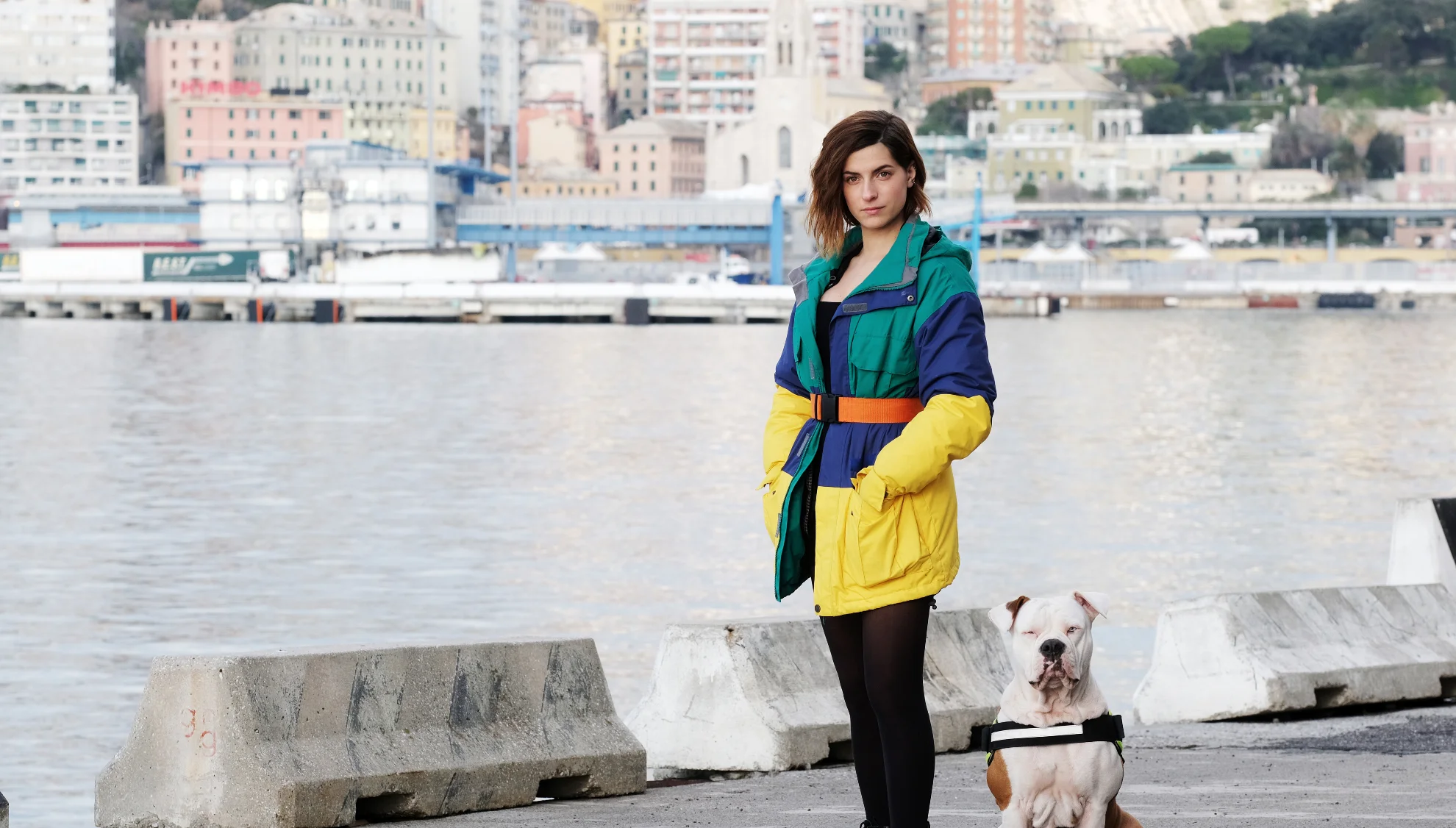
«Lo puoi dire, non è un’offesa!»
by Arianna Vergari
Overview
Rai Uno
2021-present
2 seasons; 6 episodes per season
loosely based on the novels by Patrizia Rinaldi: Blanca (2009); Tre, numero imperfetto (2012); Rosso Caldo (2014); La danza dei veleni. Il ritorno di Blanca (2019); Blanca e le niñas viejas (2022)
Jan Maria Michelini (S1-2: Ep. 1-3); Giacomo Martelli (S1: Ep. 4-6); Michele Soavi (S2: Ep. 4-6)
Francesco Arlanch Mario Ruggeri, Luisa Cotta Ramosino, Lea Tafuri
Lux Vide, Rai Fiction
Alessandro Pesci
Alessio Doglione (S1-2: Ep. 1-3); Danilo Perticara (S1: Ep. 4-6); Davide Miele (S2: Ep. 4-6)
Calibro 35
Maria Chiara Giannetta, Giuseppe Zeno, Enzo Paci, Pierpaolo Spollon, Michela Cescon, Stefano Dionisi, Sara Ciocca, Ugo Dighero, Chiara Baschetti, Federica Cacciola, Raffaele Esposito, Carlo Sciaccaluga, Sandra Ceccarelli, Dario Manera, Sara Garaventa, Antonio Zavatteri, Gualtiero Burzi, Fiorenza Pieri, Margareth Madè
Rai Fiction
Gallery
Poster (first season)

Poster (second season)

First season


Second season
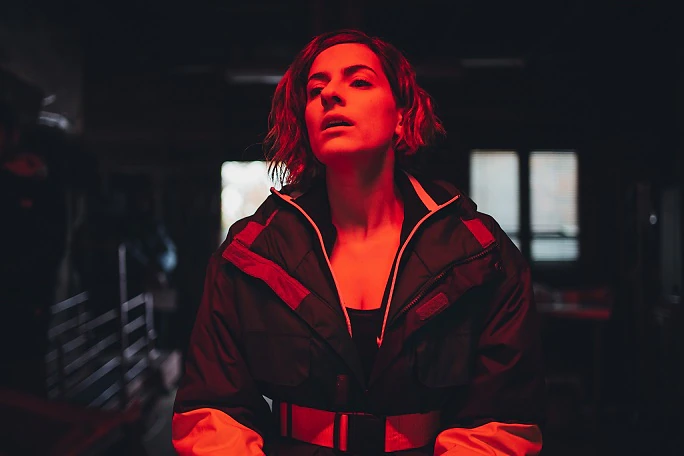


Pressbook
First season
Second season
Representation strategies, rhetorics and stereotypes
Narrative & characters
Blanca moves at the intersection of crime drama and critical reflection on disability, through a protagonist who defies conventional expectations: a young blind police consultant equipped with heightened auditory perception and remarkable decoding skills. The series offers a layered representation, resisting a reductive interpretation of disability as mere “lack,” while simultaneously allowing stereotypical tensions to emerge – most notably the rhetoric of super-heroization (the so-called “supercrip”). Blanca Ferrando is both exceptional and ironic, asserting her autonomy within a professional environment still marked by male dominance and hyper-rationality.The mise-en-scène constructs an original sensory subjectivity, translating Blanca’s “vision” into acoustic and dreamlike registers through immersive spaces that visualize her perception. Around Blanca unfolds a microcosm of characters – from Commissioner Liguori to her friend Stella – who contribute to modulating the perspectives on the protagonist, oscillating between protection, suspicion, fascination, and perversion. With Blanca, Italian television drama introduces a detective figure that redefines the nexus of femininity, disability, and expertise, inserting a disruptive element into the national crime landscape, albeit without fully resolving the tensions inherent in the spectacularization of difference.
Stereotypes & strategies of inclusion
Blanca constitutes a productive site for examining how narrative can simultaneously mobilize strategies of inclusion and reproduce stereotypical framings. Among its most emblematic sequences is the flashback to the accident that caused Blanca’s blindness, constructed as a form of “punishment” for a transgressive gaze. At the same time, the series develops an innovative representational strategy of inclusion through its depiction of Blanca’s subjective gaze: sequences in which the protagonist mentally reconstructs events through soundscapes and tactile details foreground a non-stereotypical perspective, rejecting the convention of absolute darkness as the dominant visual code of blindness.
Equally significant is Blanca’s relationship with her best friend Stella. Through video calls and the exchange of images, Stella provides a form of “shared gaze” that supports Blanca without slipping into paternalism – embodying a model of female solidarity that stands in stark contrast to the invasive, voyeuristic gaze of the surveillance systems through which the season’s villain monitors her.
This interplay of gazes – between masculine control and feminine support – illuminates the tensions underpinning the series’ representational strategies, oscillating between moments of super-heroization, in which Blanca is figured as a detective with quasi-superhuman abilities, and instances of genuinely inclusive authenticity that render her everyday life without recourse to rhetorical excess.
The Excess of Vision

Blanca was not born blind; she lost her sight following a traumatic accident. The flashback staging of this event establishes a powerful causal link between young Blanca’s “forbidden” gaze and the subsequent punishment it provokes. In the recollection, the child approaches a beach cabin after hearing unsettling sounds from inside. Peering through the half-open door, she witnesses the beginning of a sexual assault against her sister, who is secluded there with her boyfriend. Blanca runs off in search of help, but on returning finds the cabin engulfed in flames. In her desperate attempt to rescue her sister, she sustains severe burns that result in blindness, while the sister perishes in the fire.
This impairment – framed almost as a punishment for the excesses of a transgressive gaze – is compounded by an additional burden: based on what she had glimpsed, Blanca hastily accuses her sister’s boyfriend of arson and murder. By the end of the first season, however, the investigation demonstrates his innocence, revealing her accusation as unfounded. Blanca’s gaze is thus delegitimized, exposed as unreliable, and made directly responsible for the unjust condemnation of another.
This narrative arc echoes regressive representational patterns of female agency, long identified in feminist scholarship. Read through the lens of Disability Studies, moreover, Blanca’s blindness may be interpreted as an externally imposed condition – resembling a supernatural curse or moral retribution – arising from the violation of a taboo, namely the act of witnessing what was forbidden.
Blanca’s Gaze

The aesthetic and productional distinctiveness of the series lies in a visionary dimension that is rather unusual within Rai’s televisual output. Blanca is able to mentally reconstruct certain scenes on the basis of sound cues, most notably the pattering of rain. Through the device of a darkened room in which objects and figures emerge in dreamlike fashion, the series conveys the protagonist’s subjective perception, crafting what feels like a genuine form of inner vision.
Traditionally, cinema has appropriated the visual experience of blind individuals by rendering it either as absolute darkness or as blurred imagery, thus aligning itself with a normative gaze – coded as white, male, heterosexual, and able-bodied – that ultimately reinforces its own hegemony. Blanca, by contrast, reclaims and revalorizes what might be called a “blind gaze,” representing it as vivid, colorful, and almost pop in aesthetic. These sequences, by immersing the viewer in her perceptual world, endow her with an original form of agency, decisively distancing the representation from entrenched stereotypes of blindness.
Conversations
Interview with actress Maria Chiara Giannetta, on the occasion of the release of Blanca’s second season, discussing the character’s developments and new challenges (Rai, October 2, 2023).
Interview with actor Pierpaolo Spollon, on the occasion of the release of Blanca’s second season, in which the character Nanni must “rise from the ashes” (Rai, October 4, 2023).
Giulia Bertollini interviews director Jan Michelini and actor Giuseppe Zeno about the upheavals affecting not only Blanca but also the other characters around her (SuperGuidaTv, October 2, 2023).
Business strategies and communication rhetorics
Strategies
The total production cost of Blanca amounted to €11,067,542.97 for the first season and €13,450,653.10 for the second. An analysis of the show’s production strategies reveals how Rai Fiction, in partnership with Lux Vide, sought to combine objectives of inclusion with the conventions of a popular, broadly accessible narrative, one capable of engaging general audiences while also positioning itself for international distribution. Statements by Maria Pia Ammirati, director of Rai Fiction, emphasize that the series embodies the mission of Rai’s so-called “Story Factory,” aiming to integrate disability as a narrative resource within a framework of normalization and inclusive representation. Yet the notion of a “fluid normality” evoked by the public broadcaster risks remaining mostly rhetorical: narratively, Blanca is constructed as a “special” figure, endowed with heightened senses that make her functional to the logic of the crime genre, thereby perpetuating entrenched stereotypes within Italian serial storytelling.
From an industrial perspective, Lux Vide has strongly foregrounded Blanca’s innovative and international vocation, highlighting its use of experimental directing techniques, striking musical scores, and a vibrant, pop-inflected aesthetic. Notably, Blanca is the first television production worldwide to experiment with holophony, a recording technology that reproduces sound in a manner closely resembling natural human auditory perception – an innovation further enhanced by the artistic consultancy of Maestro Andrea Bocelli.
These strategies aim to render the series exportable, as evidenced by sales in France and Spain, while also reinforcing a narrative model in which diversity is spectacularized and rendered “exceptional” in order to be marketable, without critically addressing the social and cultural barriers that structure disability in everyday life.
The show’s popularity – averaging more than 4.4 million viewers and reaching audience share peaks above 30% in its second season – nonetheless confirms the solidity of a production model that blends police procedural tension with romantic interludes and light comedy, while presenting inclusion as a structural element of mainstream storytelling. Yet it is precisely this formula, calibrated for broad popular appeal, that risks neutralizing more radical engagements with disability, reducing it instead to reassuring and “acceptable” forms of representation.
Communication rhetorics
The communication frameworks constructed around Blanca reveals a deeply ambivalent rhetoric, oscillating between the exaltation of the protagonist as a “superhero” and her portrayal as a “normal” figure embedded in everyday life. At the launch press conference (November 2021), producer Luca Bernabei described Blanca as “a little superhero,” capable of transforming disability into a winning resource. Similarly, the Rai pressbook emphasizes the rhetoric of sensory superpowers that allow the protagonist to make an exceptional contribution to police investigations: “Blanca becomes invaluable thanks to her superpowers.”While seemingly affirmative, this narrative risks reproducing stereotypes associated with the “supercrip” trope, in which disability is rendered acceptable only when linked to extraordinary abilities. A particularly telling example of this rhetoric emerged during the fourth evening of the 2022 Sanremo Festival, when actress Maria Chiara Giannetta (who plays Blanca) invited five blind individuals on stage, referred to as “Guardians” or “Angels,” acknowledging their role in shaping her character. Yet these individuals were given no opportunity to speak for themselves; instead, the monologue remained in the hands of the actress, who cast them as embodiments of extraordinary humanity and courage. This paternalistic and sentimentalist framing risks infantilizing those involved, even as the series itself, at least in part, attempts to counter such tendencies through its ironic and self-aware protagonist.
Conversations
Laura Squillaci interviews Maestro Andrea Bocelli, the series’ artistic consultant, and lead actress Maria Chiara Giannetta, who plays the visually impaired police officer (RaiNews, September 7, 2021).
“Blanca: How a TV Series Develops Around a Place”, Press Release by the Genova Liguria Film Commission, December 14, 2021.
«For the Genova Liguria Film Commission, the production of Blanca was a real test of endurance: 18 months of daily operations, 28 days of site inspections, 60 locations scouted, five weeks of shooting with a 70-person crew, 2,000 workdays and 1,500 hotel nights. The project brought in a wide network of local professionals and suppliers, anchoring the production firmly in the region. “The success of Blanca shows that Liguria has what it takes to attract major television dramas,” noted Ilaria Cavo, the Regional Councillor for Culture and Entertainment. “Our region is a natural film set, with locations that have real appeal, an organizational network that believes in cinema, and targeted funding to support productions. The partnership between culture and enterprise has been essential. And the success of this drama, in particular, not only highlights the territory but also carries a powerful social message: culture combined with inclusion”.
Circulation and audience responses
Circulation patterns
Blanca premiered on Rai 1, with the first season airing from November 22 to December 21, 2021, and the second from October 5 to November 9, 2023. The series was first presented on September 6, 2021, at the 78th Venice International Film Festival, while the first two episodes of the second season were previewed on RaiPlay on November 20, 2021. As noted by Aldo Grasso in Corriere della Sera, RaiPlay has confirmed its role as a strategic platform: “within just a couple of weeks, the first episode achieved a remarkable on-demand performance, with over 1.1 million streams and an average audience of nearly half a million viewers. This represents an ‘incremental’ audience in addition to to the 4 million viewers (23.2% share) reached with the broadcast of the first episode on October 5 on Rai 1.”
While the final episode of the second season drew 4,439,000 viewers, corresponding to a 24.3% share, the last episode of the first season had set a seasonal record, with 5.67 million viewers and a 26% share. Both seasons are currently available in full on RaiPlay and on Netflix.
Following its success in Italy, the series was distributed internationally, airing in Spain on Telecinco (August 2022), in France on M6 (January 2023), and in Québec on Addik. On June 27, 2025, the third season was premiered at the Italian Global Series Festival, ahead of its scheduled broadcast on Rai 1 in autumn 2025.
Reception
The series Blanca has enjoyed widespread acclaim among Italian audiences and received generally positive reviews from critics. Many assessments – such as those by Moccagatta in FilmTv and Carelli in Domani – agree in describing Blanca as a series that successfully combines the classical structure of the procedural with an original representation of disability. The protagonist is portrayed as strong, witty, and radiant, rejecting any form of self-pity and facing life with determination, resilience, and humor. Crucially, Blanca is not presented either as a victim or as a heroine endowed with supernatural powers; rather, her “superpower” is framed as a heightened, credible sensitivity – particularly in her use of hearing – which complements more conventional profiling techniques.
In terms of audience reception, the series’ success was striking: averaging over 5 million viewers per episode, it captured both a broad popular following and the younger demographic, thanks in part to the empathetic presence of Linneo the dog, a central narrative element and emotional icon of the series. Critical dissent has been comparatively rare. Among the few exceptions is Dondi in L’Espresso, who acknowledges Blanca’s merit in foregrounding disability, yet warns of the tendency toward a “forced superpower” narrative, whereby disability is transformed into a form of functional exceptionalism for the purposes of fiction, but one that lacks realism when compared with the everyday lives of those who actually experience such conditions. From a production and territorial perspective, several reviews highlight the positive impact of the series on the city of Genoa, the primary filming location and an authentic co-protagonist. However, none of the analyses surveyed reflect on the degree to which the city itself is represented as genuinely accessible or inclusive for a blind person.
Awards and Festivals
Blanca received the DQ Craft Award as one of “the most innovative global productions” at the C21 International Drama Awards in December 2021. In 2022, Maria Chiara Giannetta won the Nastro d’Argento as Best Leading Actress in a major series for her performance in Blanca; in 2024, she was further recognized with the Ciak d’Oro as Best Italian Actress in a TV series for the same role.
Italian and foreign press
Italian press
Rocco Moccagatta, “One of Many Women”, FilmTv, January 15, 2022.
«Blanca is blind […], yet she refuses to wallow in self-pity. Instead, she grabs life with both hands and shapes it to fit her own path […]. At its core, Blanca is a procedural – one of those dramas where the profiler of the moment turns a disability into an unexpected resource, almost a kind of superpower. In this case, it is an extraordinary sharpening of her other senses – hearing above all – that often proves decisive in solving the investigations».
Paolo Carelli, “Blanca Is Not the Usual TV Drama: That’s Why It’s So Popular”, Domani, November 2, 2023.
«With an average audience consistently hovering around four million viewers, the TV series Blanca stands out as one of the most compelling television phenomena of the current season. While it has not, at least for now, matched the ratings of its successful debut two years ago – when nearly six million tuned in for the final episode of the first season – the show (which returned on October 5 with its second season) continues to spark conversations, generate empathy and affection for its characters, and allow Rai Uno to dominate Thursday night programming. In short, Blanca has all the classic ingredients of a Rai drama in place. And yet, as a whole, it distinguishes itself as a groundbreaking series, introducing significant innovations on both the production side and the aesthetic and narrative fronts. Above all, the series addresses the theme of physical disability from a perspective that avoids sentimentality. […] There is nothing pitying in its portrayal of Blanca’s condition; this is not a “difference” compensated for by implausible “superpowers.” Rather, it is presented as an original blend of instinct and rationality, of heightened sensory perception and the traditional methods of an internationally recognizable profiler.
Beatrice Dondi, “Blanca and Disability Turned into a Superpower”, L’espresso, December 6, 2021.
«As (all too) often happens, disability finds its way onto the small screen through a rigid trade-off. Viewers are invited to follow the adventures of a blind, autistic, wheelchair-using, or psychologically unstable character – yet only on the condition that they possess at least one exceptional gift. Otherwise, the story doesn’t hold. In Blanca’s case, that gift is hearing: an extraordinary acuity that allows her to perceive what ordinary mortals never could, enabling her to unravel complex cases with a social dimension – troubled children, murdered women, denied rights, and other compelling tales tinged with crime».